Christian classics
The Duties of Parents
Love, prayer, nurture, and responsibility in the Christian home
William Gouge examines parents’ duties from Ephesians 6:4, tracing care from infancy through teaching, discipline, adulthood, and the family’s future.
79 original sections · 10 reading chapters
Book contents ↓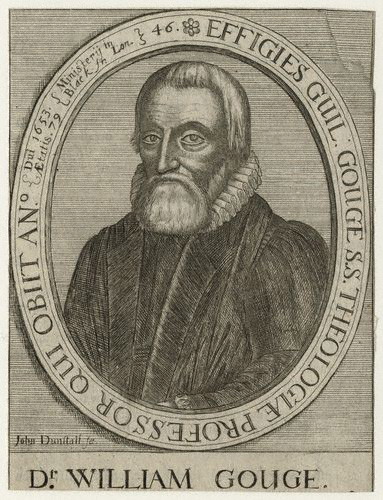
About the author
William Gouge
William Gouge (c. 1575–1653) was a Puritan minister at St Ann Blackfriars in London for more than forty years. His preaching, catechizing, and writing focused on Scripture and Christian life in the household. He was later a member of the Westminster Assembly.
Of Domestical Duties (1622) applied Ephesians 5–6 to relationships in the home. Its sixth treatise, presented here, addresses parents in detail: affection, provision, prayer, instruction, discipline, fairness among children, and the responsibilities of guardians and teachers.
Book contents
- Chapter 1Love, Prayer, and Providence→
- Chapter 2Care in Infancy→
- Chapter 3Baptism and Daily Provision→
- Chapter 4Nurture, Manners, and Work→
- Chapter 5Teaching Children Piety→
- Chapter 6Admonition and Correction→
- Chapter 7Callings, Marriage, and Portions→
- Chapter 8Parents’ Last Words and Estates→
- Chapter 9Equal Regard for Every Child→
- Chapter 10Step-Parents, Guardians, and Tutors→
About this edition
This is the complete sixth treatise of Gouge’s Of Domesticall Duties, based on the 1622 EEBO-TCP transcription. All 79 original numbered sections and their marginal notes are retained. The ten reading-chapter titles are editorial; Gouge’s own section headings remain in the text. Bracketed ⟦G-number⟧ markers identify damaged or uncertain words in the source transcription. The Chinese edition follows the Chinese Union Version for identifiable direct Scripture quotations. The original discussions of parental authority and correction remain visible as part of this seventeenth-century work. https://quod.lib.umich.edu/e/eebo/A68107.0001.001